

The Alchemy of Fillmore East: How Duane Allman & Dickey Betts Redefined Dual Guitar Magic
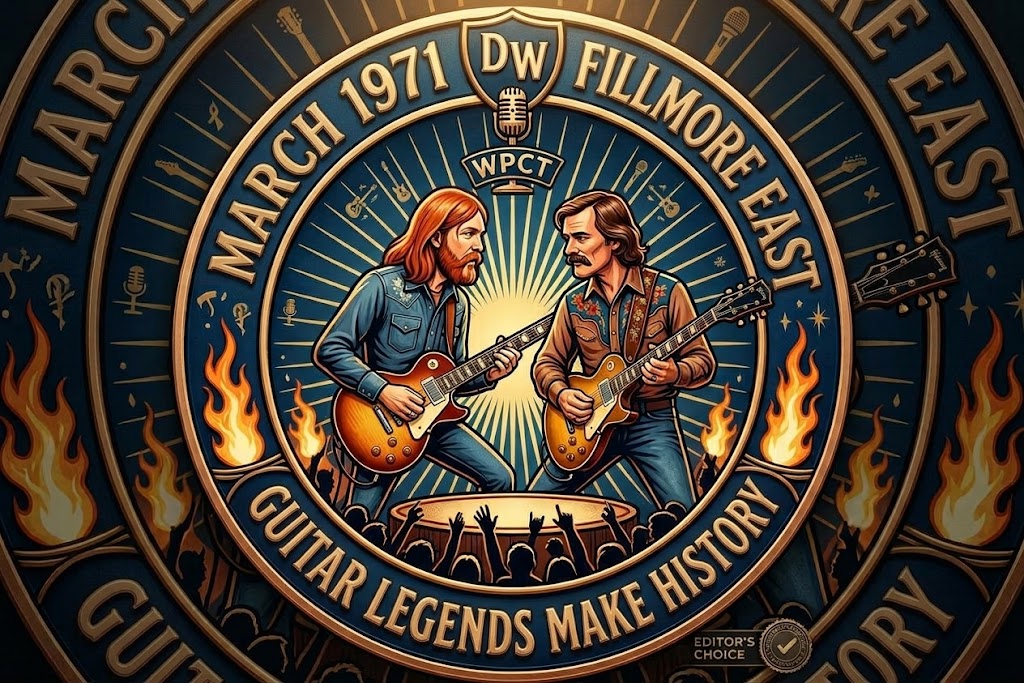
By Cindy Wells | A-1 Shoppers World Entertainment Desk In March 1971, when The Allman Brothers Band walked onto the stage at Bill Graham’s iconic Fillmore East in New York City, they weren’t just playing a show. They were about to record what many critics and musicians consider the greatest live album in rock history.At the absolute center of that thunderous, jazz-infused blues-rock machine was a twin-guitar attack that has never been equaled. But the real secret to the Allman Brothers’ sound wasn’t just having two lead guitarists—it was the distinct, contrasting chemistry between Duane Allman and Dickey Betts. Two Distinct Styles, One Unified Voice To understand why At Fillmore East sounds so monumental, you have to look at the vastly different musical DNA that Duane and Dickey brought to the stage. 1. Duane Allman: The Soaring, Vocal Slide MasterDuane was the visionary force. Playing primarily in Open E tuning with a glass Coricidin cold medicine bottle on his ring finger, Duane played the guitar like a lead singer. His slide work wasn’t just fast—it cried, sang, and mimicked the human voice. Tone-wise, Duane favored a warm, fat, smooth neck-pickup growl from his Sunburst Gibson Les Paul, pushing his Marshall amps into a thick, singing sustain. 2. Dickey Betts: The Precise, Country-Honed Melodist Where Duane was fiery and fluid, Dickey Betts was biting, rhythmic, and razor-sharp. Rooted deeply in country picking, Western swing, and modal jazz, Betts played in standard tuning with a clean, bridge-pickup bite that cut straight through the mix. His solos were masterclasses in melody—think of his soaring, lyrical lines on “In Memory of Elizabeth Reed.” The Genius of “Call and Response”
On tracks like “Statesboro Blues,” “Stormy Monday,” and the epic “Whipping Post,” Duane and Dickey never collided or stepped on each other’s toes. Instead, they engaged in a masterclass of give-and-take:
- Tone Separation: In the stereo mix, Duane’s round, fat tone sits on one side while Dickey’s bright, stinging tone sits on the other. You can immediately tell who is playing.
- The Harmony Lines: Instead of standard unison riffs, Dickey and Duane composed intricate twin-guitar harmonies in thirds and sixths, borrowing heavily from Miles Davis and jazz modal scales.
- Passing the Baton: Listen to “In Memory of Elizabeth Reed”—Dickey takes the first solo, building a smooth, jazzy melodic arc. Then Duane steps up with a soaring, blues-drenched slide solo that takes the song into the stratosphere.
- 🎸 Insider Lore: The Show That Lasted Until Sunrise
- During the legendary Fillmore runs, the band lost all track of time in their relentless, improvised jams.
- As Dickey Betts later recalled, the band played completely oblivious to the clock:
“We played until daylight that morning. I remember it was dark in there, and when they opened the exit doors, the sun about knocked us down. We didn’t realize we had played until seven or eight o’clock in the morning… We didn’t play for the tape, we played for the people.”
Drummer Butch Trucks remembered the awe of that exact moment when the final notes died down:
“We played for roughly seven straight hours with everything we had. When we finished, there was no applause whatsoever—the place was deathly quiet. Someone got up and opened the doors, the sun came pouring in, and you could see this whole audience with big smiles on their faces, nobody moving until finally they got up and started quietly leaving.”
A Timeless Legacy Produced by the legendary Tom Dowd, At Fillmore East captured lightning in a bottle. Tragically, Duane Allman was taken from us just months after these recordings in October 1971. But those marathon nights in New York recorded forever what happens when two master guitarists leave their egos at the door and play purely for the music.
Whether you’re a lifelong guitar player listening for pickup switches or a music lover soaking in the groove, At Fillmore East remains the ultimate masterclass in guitar chemistry.
WPCT RADIO LISTENERS: Tune in to the WPCT Classic Rock Spotlight all week as Johnny Dee spins tracks from At Fillmore East alongside retrospectives on classic rock guitar icons!